IN THIS SECTION
Alumni News
We are very proud of the diverse achievements of our alumni, some of which are highlighted in these pages. If you are a previous student we would be thrilled to hear from you. Please e-mail us at with your latest news to share with your fellow alumni and inspire our current students. We also would like to keep you up to date on recent events in the BSD, and provide opportunities for you to interact with our current students.
To learn about our alumni, click on the respective name below.
Alex Dehgan, PhD

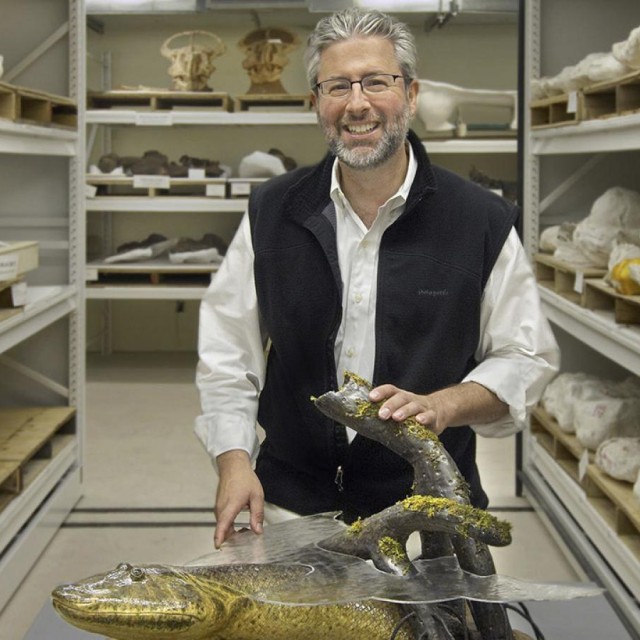
Alex Dehgan, PhD (Committee on Evolutionary Biology, 2003), is the Science and Technology Advisor at the United States Agency for International Development (USAID). Dr. Dehgan’s role is to restore science and technology to its rightful place within USAID and ensure that USAID is the global leader on employing science, technology, and research to help solve traditional and persistent development challenges. Prior to his move to USAID, Dr. Dehgan worked as a Senior Scientist and Policy Adviser with the Science Adviser to the Secretary of State, where he worked on science diplomacy issues with the Muslim world, including assisting implementation of the S&T aspects of the President’s Global Engagement Effort announced in Cairo, working to rebuild science in Iraq, and seeking to use science as a diplomatic tool within our most significant foreign policy challenges, including Iraq, Afghanistan, and Pakistan. Dr. Dehgan also recently served as a Senior Adviser to Ambassador Dennis Ross, the Special Adviser for the Gulf and South West Asia, where he developed a science diplomacy engagement strategy with the Islamic Republic of Iran, advised on internal political dynamics, and served as the liaison to Ambassador Holbrooke and the Office of the Special Representative to the President for Afghanistan and Pakistan.
Dr. Alex Dehgan previously was the Afghanistan Country Director for the Wildlife Conservation Society’s program in Afghanistan, which he founded. Dr. Dehgan holds a Ph.D and M.Sc. from The University of Chicago’s Committee on Evolutionary Biology, where he focused on extinction and adaptation of 12 lemur species during environmental change in tropical forests in Madagascar, a J.D. from the University of California, Hastings College of the Law, and B.S. in Zoology and Political Science from Duke University. Dr. Dehgan was featured in the Spring 2008 edition of The Imprint.Joel E. Kleinman, MD, PhD
Joel E. Kleinman, MD, PhD (Pharmacological & Physiolog-cal Sciences, 1974) is the Section Chief of the Section on Neuropathology and the Deputy Chief of the Clinical Brain Disorders Branch. Dr. Kleinman received his B.S., M.D. and Ph.D. from the University of Chicago. He completed an internship at San Francisco General Hospital (University of California Medical School in San Francisco) and residencies in psychiatry and neurology at Massachusetts Mental Health Center (Harvard Medical School) and George Washington University Medical School, respectively. Dr. Kleinman has been at the NIMH from 1976 to the present and has published over 200 papers primarily on the neuropathology of schizophrenia. His more recent work has focused on susceptibility genes for schizophrenia including COMT, GRM3, DISC1, DTNBP1, GAD1, KCNH2 and NRG1. In particular, his group has been interested in studying allelic variations in these genes and their effects on mRNA expression of specific alternate transcripts and their proteins in brain development and schizophrenia. See The Imprint for more information.Huiping Liu, MD, PhD
Huiping Liu, MD, PhD (Pathology, 2006) is a postdoctoral fellow in Dr. Geoffrey Greene’s laboratory and studies cancer stem cell metastasis. The journey to this stage in her career originated when she received her MD (1996) from the Military Medical University in Xi’an, China. While in medical school Dr. Liu’s exposure to clinical research sparked an interest in a career in research. She acted on this desire and acquired a masters in molecular biology after finishing medical school. During her masters training, her mentor traveled frequently to the National Institutes of Health (NIH) and exposed her to the opportunities to pursue research overseas. At the time, Dr. Liu wanted to explore the world and completing her master’s solidified her passion for basic research. Therefore, with the encouragement of her mentor, she decided to pursue her research career in the United States. A friend connected her with a faculty member at the University of Chicago, and after a phone interview, she left China to pursue a research career in the United States. After a year as a visiting student, she was accepted to the PhD program in the Department of Pathology and joined the entering class of 2001. As a graduate student, Dr. Liu studied the rb tumor suppressor in Dr. Kay Macleod’s laboratory. Her first project focused on characterizing a cleaved form of rb that was present in tumor and macrophage cells. Later she determined why rb deficient cells exhibit increased sensitivity to chemotherapy. She found that after DNA damage, up regulated expression of PARP leads a depletion of ATP pools. This depletion contributes to the down regulation of the anti-apoptotic protein Bcl-xl and leads to necrosis. Both of these projects yielded publications in peer-reviewed journals. After graduating in the winter of 2006, she joined Dr. Michael Clarke’s laboratory at Stanford University. Dr. Clarke was the first scientist to publish articles that characterized breast cancer stem cells. In Dr. Clarke’s laboratory, she isolated breast cancer stem cells from primary tumor samples, transfected them with a GFP reporter construct, injected immuno-compromised mice with the stem cells and visualized their localization in mice. She also employed a siRNA screen to identify microRNAs that may mediate metastasis. By September of 2008, she started to look for a postdoctoral position that would bring her back to Chicago to re-unite her family. She learned of the Chicago Fellows program that provides two years of funding for senior postdoctoral fellows. It was a very competitive program with three slots for the entire BSD and only one for cancer biology. She met with Dr. Geoffrey Greene, decided to join his lab and applied for the fellowship. With the support of Dr. Clarke, Dr. Liu was able to take all of her cancer stem cell stocks and mouse models and she moved to Dr. Greene’s lab in July of 2009. Fortunately, she was selected as a Chicago Fellow and acquired funding for two years. See the full Imprint article on Dr. Liu. Rabiah Mayas, PhD
Rabiah Mayas, PhD (Biochemistry and Molecular Biology, 2007) is currently Director of Science, Center for the Advancement of Science Education, Museum of Science and Industry. Before that, she served as Science Director for Science Chicago. About her work in science outreach, Mayas commented “I have long been interested in pursuing outreach efforts, as I've been continually involved in such activities since college. While in graduate school, I mentored elementary and middle school students on the weekends, and brought hands-on science experiments to Chicago Public School high school biology classrooms. While I love the excitement of questioning and discovery that bench research provides, I realized a few years ago that my true passion lies in helping young people find their own curiosity and love of science. So I jumped at the chance to be a part of the once-in-a-lifetime experience that is Science Chicago, to work with the host of organizations in the Chicago region that are dedicated to promoting scientific engagement and exciting kids about just how fun science and engineering can be.” She was featured in the Fall 2008 edition of The Imprint.Jennifer McPartland, PhD
Jennifer McPartland, PhD (Committee on Microbiology, 2008) is a health scientist at the Environmental Defense Fund (EDF), working on chemical policy. Her work in this position enables her to use her scientific training to improve upon chemical policies that are in desperate need of reform so that both the environment and public health are adequately protected. After a brief post-doc in the Rothman-Denes lab until July 2009, Dr. McPartland became the 2009-2010 American Society for Microbiology/American Association for the Advancement of Science (AAAS) Congressional Fellow for 2009-2010. This fellowship is well known as a conduit for moving scientists from the bench to the government arena so they can become policy-savvy. Although she was the sole recipient of the American Society for Microbiology Fellowship, she trained with other executive branch and congressional fellows through the AAAS fellowship program. This program provides an intense orientation in policy before placing fellows in either congressional or executive branch offices across the country. Dr. McPartland was initially interested in working on food safety policy, and so accepted an offer to work in the office of Congresswoman Diana DeGette in Denver, Colorado. While in this office she also accepted an opportunity to work on legislation focused on chemicals safety policy. At EDF, Dr. McPartland works on changing the Toxic Substances Control Act (TSCA), the law that charges the Environmental Protection Agency (EPA) with ensuring that chemicals are safe and aren't harmful to humans or the environment. This is a very large and important undertaking because there are tens of thousands of chemicals out there that lack adequate health and safety data. This is a result of inadequacies in the original statute, and so advocating for reform requires careful reading and analysis of the policy to ultimately describe where the inadequacies are and determine possible solutions. She also monitors the EPA and helps decide when best to weigh in on the agency's chemicals regulation activities. Dr. McPartland graduated from the University of Chicago with her PhD in Microbiology in December 2008 under the mentorship of Dr. Lucia Rothman-Denes. Her graduate work focused on the interaction between the bacteriophage N4 and its E. coli K-12 host, where she characterized the affect of two mutant N4 virion proteins on this interaction. She was featured in the Spring 2011 edition of The Imprint.Linda Zuckerman, PhD
Linda Zuckerman, PhD (Immunology, 1996) is the Vice President of Preclinical Development at ProFibrix, Inc. Dr. Zuckerman performed her thesis research on T-cell signaling and the identification and characterization of T-cell co-activators in the laboratory of Dr. Jim Miller. From Chicago, Dr. Zuckerman moved to a postdoctoral position in the laboratory of Dr. Nigel Killeen at the University of California at San Francisco (UCSF). There she pursued further work in the field of T-cell biology, but this time investigating T-cell development and the molecular biology of T-cell fate. After her time at UCSF, Zuckerman took a position at Genentech and employed her knowledge of T-cell signaling while working in the bioanalytical methods development group where she helped develop a variety of assays for the Raptiva program, which developed a therapeutic antibody used for the treatment of psoriasis. From Genentech, Zuckerman moved to Zymogenetics, first taking a position as a scientist in the preclinical development group and, a few years later, becoming director of both the bioanalytical research and development group and the mechanistic pharmacology group, a position which she held for several years. In 2007, she spent a year in the portfolio and project management department overseeing all of the program leaders for lead development programs. In addition, she sat on several program oversight committees. In her time at Zymogenetics, Zuckerman was involved in many different development projects focusing on areas in oncology and autoimmunity among others as well as the development of recombinant human thrombin working on the core team that guided that project to licensure in 2007. Most recently, Dr. Zuckerman has extended her work with coagulation-centered technologies by joining a smaller startup company called ProFibrix, Inc (a subsidiary of ProFibrix B/V in the Netherlands) as the Vice President of Preclinical Development. She was featured in The Imprint the Summer 2009.